Schema Theory
Schema Theory
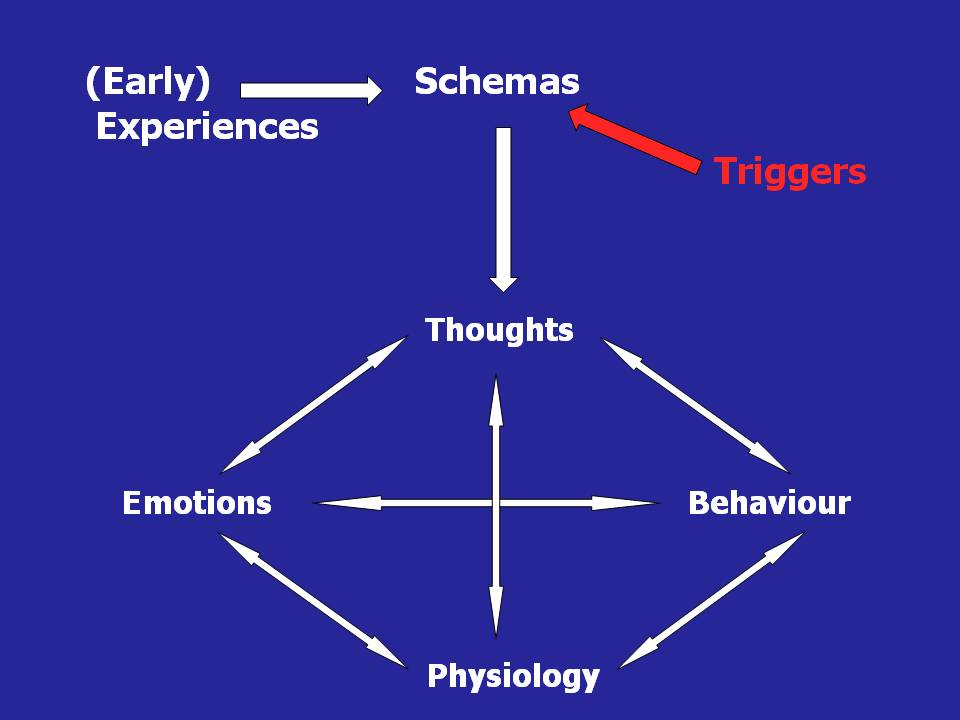
Schema theory proposes that humans organise knowledge in structured mental frameworks called schemas. Schemas are built through experience and stored in long-term memory. They guide how we interpret new information, fill gaps in memory, make inferences, and predict what will happen next. Rather than passively recording reality, the brain actively constructs its understanding of the world based on existing schemas.
Origins and Key Concepts
The concept of schemas was introduced by Frederic Bartlett in his 1932 book Remembering. Bartlett argued against the prevailing view that memory was a passive recording system. He proposed instead that memory is reconstructive -- people do not simply replay stored recordings but rather rebuild memories at the point of retrieval, often filling gaps using their existing schemas. Jean Piaget later used the concept in his theory of cognitive development, proposing that children build schemas through processes of assimilation (fitting new information into existing schemas) and accommodation (modifying schemas when new information cannot be fitted in).
Key Research: Bartlett's War of the Ghosts (1932)
Bartlett asked English participants to read a Native American folk tale called 'The War of the Ghosts,' which contained culturally unfamiliar elements. Participants' recall was systematically distorted: they omitted details that did not fit their cultural schemas, changed unfamiliar elements to familiar ones, and rationalised culturally specific elements. For instance, canoes were often recalled as boats. These distortions became more pronounced over time. Bartlett concluded that memory is not reproductive but reconstructive, shaped by existing schemas.
Schemas in Real-World Behaviour: Social schemas (stereotypes) are cognitive frameworks about social groups that lead people to expect and remember schema-consistent information. Scripts are schemas about sequences of events in familiar situations (e.g., visiting a restaurant).
Evaluation: Schema theory is well-supported by both laboratory and real-world evidence and successfully accounts for the reconstructive nature of memory. However, the concept of a schema is broad and somewhat vague, making it difficult to operationalise and test precisely.
Practice Question
Question 1.2 — Short Answer
Using one research study, explain how Schema Theory accounts for the reconstructive nature of memory.
Command term — "Explain": Give a detailed account including reasons or causes. Name the study, outline its procedure and key findings, and connect these to the reconstructive memory claim.