Organizational Structure
1.2 Organizational Structure
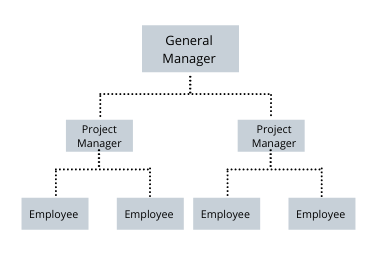
As businesses grow, managing all tasks becomes increasingly complex. A single individual cannot handle every responsibility. Therefore, organizations divide work among employees and establish clear reporting relationships. This arrangement is known as the organizational structure.
An organizational structure defines how tasks are divided, who is responsible for each task, and how employees report to one another.
Organizations often represent their structure using an organizational chart, which visually displays the hierarchy and relationships between different roles.
Elements of Organizational Structure
- Hierarchy: Refers to the different levels of authority within an organization. Senior executives typically occupy the highest level, followed by middle managers and operational employees.
- Chain of Command: Identifies the line of authority from the top of the organization to the lowest level. Clarifies who employees report to and who is responsible for making decisions.
- Span of Control: Refers to the number of employees supervised by a manager. A wide span of control means a manager supervises many employees, while a narrow span means fewer employees.
- Delegation: The process of assigning responsibility and authority to employees so they can complete tasks independently.
- Centralization and Decentralization: Centralization occurs when decision-making is concentrated at the top levels of management. Decentralization allows lower-level managers to make decisions.
Hierarchical Structure
Traditional structure with multiple layers of management. Authority flows from senior executives to lower-level employees. Advantages include clear authority and defined roles. Disadvantages: communication can be slow, and decision-making may take longer.
Functional Structure
Employees are grouped based on their specialized functions, such as marketing, finance, operations, or human resources. Allows employees to develop expertise in specific areas but may create communication barriers between departments.
Matrix Structure
Employees report to more than one manager, usually a functional manager and a project manager. Encourages collaboration across departments but may create confusion regarding authority.
Flat Structure
Fewer levels of management. Employees have greater independence and decision-making power. Encourages innovation and faster communication, but managers may find it difficult to supervise many employees.
Activity: Imagine you are starting a small bakery business. Create a simple organizational structure, including roles such as Owner, Baker, Sales staff, Marketing manager. How would these roles report to each other?