Ecosystems
Ecosystems
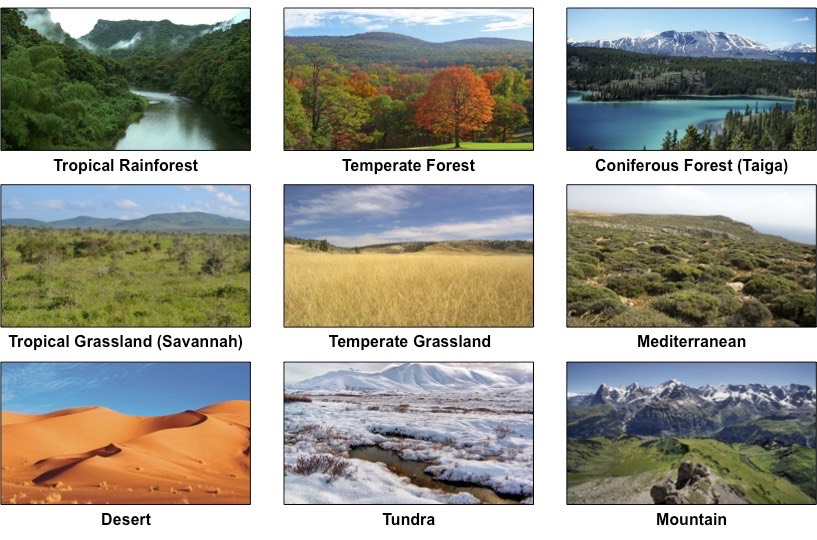
Stand at the edge of a pond. You can see water, mud, reeds, water lilies, insects, frogs, fish, and birds. But the ecosystem is far more than what is visible. Billions of bacteria live in the water and mud. Microscopic algae photosynthesize just below the surface. Fungi decompose fallen plant material. Water temperature, oxygen levels, light penetration, and the chemical composition of the water all influence which species can survive there and in what numbers.
An ecosystem is all of this together. Every living organism and every physical factor in an area, interacting as a functioning system.
Defining an Ecosystem
An ecosystem is a community of living organisms (biotic components) interacting with each other and with their non-living environment (abiotic components) as an integrated system.
Ecosystems can be very large (a tropical rainforest, an ocean) or very small (a rock pool, a puddle, a rotting log). What defines an ecosystem is not its size but the fact that its components interact with each other in ways that result in the flow of energy and cycling of nutrients.
Biotic and Abiotic Components
Biotic Components
Biotic components are all the living organisms in an ecosystem.
They include:
- Producers (plants, algae, photosynthetic bacteria)
- Primary consumers (herbivores)
- Secondary and tertiary consumers (carnivores, omnivores)
- Decomposers (bacteria, fungi)
- Parasites and their hosts
- Pollinators and the plants they pollinate
All biotic components interact with each other through feeding, competition, symbiosis, and other ecological relationships.
Abiotic Components
Abiotic components are the non-living physical and chemical factors that influence the ecosystem.
| Abiotic Factor | How It Affects the Ecosystem |
|---|---|
| Temperature | Affects metabolic rates, determines which species can survive |
| Light intensity | Determines the rate of photosynthesis and therefore productivity |
| Water availability | Essential for all life processes |
| Soil type and pH | Affects which plant species can grow |
| Mineral content | Nutrients needed for plant growth and animal nutrition |
| Salinity | Determines which aquatic organisms can survive |
| Oxygen levels | Affects which organisms can carry out aerobic respiration |
| Wind | Affects transpiration rates, seed dispersal, temperature |
Biotic and abiotic factors are deeply interconnected. Producers alter light levels and soil chemistry. Animals alter soil structure. Decomposers change nutrient availability. The abiotic environment shapes the community of organisms, and the organisms continuously modify their abiotic environment.
Population, Community, and Ecosystem
These three terms are frequently confused and need to be clearly distinguished.
Population: All the organisms of the same species living in the same area at the same time. All the rabbits in a woodland, for example.
Community: All the populations of different species living in the same area and interacting with each other. All the plants, animals, fungi, and bacteria in that woodland.
Ecosystem: The community plus all the abiotic factors of that area, interacting as an integrated system.
Energy Flow Through Ecosystems
Energy enters most ecosystems through photosynthesis by producers. It flows through the ecosystem as consumers eat producers and each other. The ecosystem exists primarily as heat released during cellular respiration at every trophic level.
This means energy flows through an ecosystem in one direction. Energy enters, passes through, and leaves. It cannot be recycled within the ecosystem. This is why ecosystems require a continuous input of energy from the Sun.
Nutrient Cycling
Unlike energy, nutrients are recycled within ecosystems. The same atoms of carbon, nitrogen, and other elements cycle repeatedly through living organisms and the non-living environment.
Decomposers play a critical role in nutrient cycling. When organisms die, decomposers break down their organic compounds, releasing inorganic nutrients back into the soil and water, where they can be taken up by producers again. Without decomposers, nutrients would remain locked in dead organic matter and become unavailable to living organisms.
Ecological Succession
Ecosystems are not static. They change over time through a process called ecological succession, where the community of organisms in an area changes progressively, with each stage altering the environment in ways that favor different species.
Primary Succession
Primary succession begins in an area where no soil or community of organisms previously existed, such as bare rock exposed after a glacier retreats, a newly formed volcanic island, or freshly deposited dunes.
Stages of primary succession:
- Pioneer species colonize the bare substrate. Lichens and mosses can grow on bare rock, breaking it down physically and chemically
- Pioneer species die and decompose, creating a thin layer of soil
- Small plants colonize the developing soil
- Larger plants establish as the soil deepens
- Eventually, a stable community develops, called the climax community
Secondary Succession
Secondary succession occurs where a community has been disrupted or destroyed but the soil remains intact, such as after a forest fire, flood, or agricultural abandonment.
Because soil already exists, secondary succession proceeds more rapidly than primary succession.
Ecosystem Stability and Biodiversity
Ecosystems with high biodiversity, many different species, are generally more stable and resilient than those with low biodiversity.
This is because a diverse ecosystem has more alternative pathways for energy flow. If one species declines, others can partially fill its ecological role. A simple ecosystem with few species is far more vulnerable to disruption. The loss of even one species can collapse the entire food web.
This principle has important implications for conservation. Protecting biodiversity is not just about preserving individual species but about maintaining the functional stability of entire ecosystems.
Human Impacts on Ecosystems
Human activity affects ecosystems in several major ways.
Deforestation destroys habitat, reduces biodiversity, disrupts water cycles, and releases stored carbon.
Pollution introduces toxic substances into ecosystems, disrupting food chains and killing sensitive species.
Climate change alters temperature and rainfall patterns, shifting the ranges of species and disrupting seasonal ecological processes like flowering and migration.
Overfishing removes top predators from marine ecosystems, disrupting food webs throughout the ocean.
Invasive species introduced by human activity compete with native species, prey on them, or introduce diseases to which they have no resistance.
Understanding how ecosystems function is the foundation for understanding these impacts and for developing effective conservation and environmental management strategies.