Number & Algebra - Practice Set 1
Number and Algebra
Practice questions covering exponential equations, mathematical induction, partial fractions, geometric series, complex numbers, De Moivre's theorem, irrationality proofs, binomial expansions, combinatorics, and financial mathematics.
Solve the equation 3^(2x) − 12·3^x + 27 = 0, giving your answers in exact form.
Answer
(a) y² − 12y + 27 = 0 (b) x = 1 or x = 2. Explanation: y² - 12y + 27 = (y-3)(y-9)=0 → y=3 or y=9 → 3^x=3 → x=1; 3^x=9 → x=2.
Prove by mathematical induction that Σ(r=1 to n) r · 2^r = 2 + (n − 1) · 2^(n+1) for all n ∈ ℤ⁺.
Answer
(a) LHS = 1·2 = 2; RHS = 2 + 0·4 = 2 ✓ (b) Assume Σᵣ₌₁ᵏ r·2ʳ = 2 + (k−1)·2ᵏ⁺¹ for some k ≥ 1 (c) Add (k+1)·2ᵏ⁺¹: RHS = 2 + (k−1)·2ᵏ⁺¹ + (k+1)·2ᵏ⁺¹ = 2 + 2ᵏ⁺¹·2k = 2 + k·2ᵏ⁺² = 2 + ((k+1)−1)·2^((k+1)+1) ✓
Express (5x + 1) / [(x + 3)(x − 1)] in partial fractions.
Answer
(a) A/(x+3) + B/(x−1) (b) A = -7/2, B = 3/2 (c) -(7/2) ln|x+3| + (3/2) ln|x-1| + C
An infinite geometric series has first term a and common ratio r, where |r| < 1. The sum to infinity is 20 and the sum of the first 3 terms is 19.
Answer
(a) S∞ = a/(1−r) = 20 ⇒ a = 20(1−r) ✓ (b) r = (−20 ± √(400−80))/40 → r ≈ -0.0513 or r ≈ -0.9487 (c) For r ≈ -0.0513, a ≈ 21.03; For r ≈ -0.9487, a ≈ 38.97
A bouncing ball is dropped from a height of 4 m. Each bounce reaches 75% of the previous height.
Answer
(a) h₆ ≈ 0.949 m (b) Total distance = 28 m (c) After 7 bounces
Let z = 2(cos(π/6) + i·sin(π/6)).
Answer
(a) z = √3 + i (b) z⁴ = −8 + 8√3·i (c) w₀ = 2(cos(π/6)+i·sin(π/6)), w₁ = 2(cos(5π/6)+i·sin(5π/6)), w₂ = 2(cos(3π/2)+i·sin(3π/2))
Prove by deduction that for any integer n, the expression n³ − n is always divisible by 6.
Answer
(a) n³ − n = (n−1)n(n+1) (b) Product of 3 consecutive integers: divisible by 2 (one even) and 3 (one multiple of 3) ⇒ divisible by 6 ✓
Let m and n be odd integers.
Answer
(a) m = 2a+1, n = 2b+1; mn = 2(2ab+a+b)+1 ⇒ odd ✓ (b) m²+n² = 4(a²+a+b²+b)+2; divisible by 2, not by 4 ✓
Prove by mathematical induction that Σᵣ₌₁ⁿ (2r − 1) = n² for all n ∈ ℤ⁺.
Answer
(a) LHS = 1; RHS = 1² = 1 ✓ (b) Assume Σᵣ₌₁ᵏ (2r−1) = k² for some k ≥ 1 (c) Add (2k+1): k² + 2k + 1 = (k+1)² ✓
Prove by contradiction that √3 is irrational.
Answer
(a) Assume √3 = p/q where p,q∈ℤ, q≠0, gcd(p,q)=1 (b) 3q² = p² ⇒ p divisible by 3. Let p=3k: q²=3k² ⇒ q divisible by 3. Contradicts gcd=1 ✓
Answer
(a) 1 − 2x + 3x² − 4x³ + … valid for |x| < 1 (b) x = 0.02 → 1 − 0.04 + 0.0012 − 0.000032 = 0.961168 ≈ 0.9612 (4 d.p.) (c) Exact: 1/1.0404 = 0.961168... Very close — small x gives excellent approximation.
Eiffel Tower replicas exist at different scales. The largest is 324 m tall. A collection of 8 replicas has heights in geometric sequence. The smallest replica is 0.5 m and the largest is 324 m.
Answer
(a) 0.5·r⁷ = 324 ⇒ r⁷ = 648 ⇒ r = 648^(1/7) ✓ (b) u₁=0.500, u₂=1.45, u₃=4.22, u₄=12.3, u₅=35.6, u₆=103, u₇=301, u₈=324 (c) S₈ ≈ 169.8 m (d) u₄ ≈ 12.3 m is closest to 10 m.
Answer
(a) |z|=2, arg(z)=2π/3 → z = 2(cos(2π/3)+i·sin(2π/3)) (b) z⁶ = 64 (real) ✓ (c) wₖ = 2^(1/4)[cos((2π/3+2kπ)/4)+i·sin((2π/3+2kπ)/4)] for k=0,1,2,3. They form a square on the Argand diagram.
A bank offers compound interest at rate r% per annum. Alice invests $P at the start of each year for n years.
Answer
(a) V = P[(1+r/100)^n − 1]/(r/100) [annuity formula] ✓ (b) P ≈ $3975 per year (c) 20000(1.05)^n > 50000 → n > ln(2.5)/ln(1.05) ≈ 18.8 → 19 years
The arithmetic sequence has sixth term u₆ = ln 2 and eighth term u₈ = (3/2) ln 4.
(ii) Find u₁.
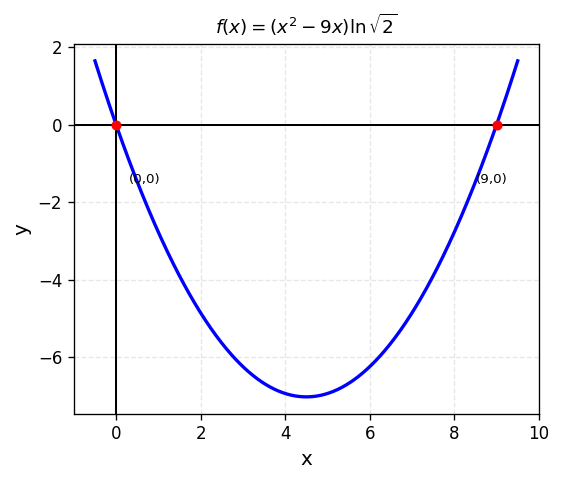
(iii) Hence show that the sum of n terms is given by Sₙ = (n² − 9n) ln √2.
(ii) Sketch f(x) on the grid below.
(ii) Solve f(x) < g(x).
(iii) Find the range of values of n that satisfy Sₙ < g(n).
Answer
(a)(i) d = ln 2; (ii) u₁ = -4 ln 2; (iii) Sₙ = (n²-9n) ln √2 ✓ (b)(i) Axis of symmetry: x = 9/2 = 4.5 (c)(i) Minimum value = -20 ln √2 = -10 ln 2 = ln(2⁻¹⁰) (d)(i) x = 0 or x = 12; (ii) 0 < x < 12; (iii) 1 ≤ n ≤ 11, n ∈ ℤ⁺
Answer
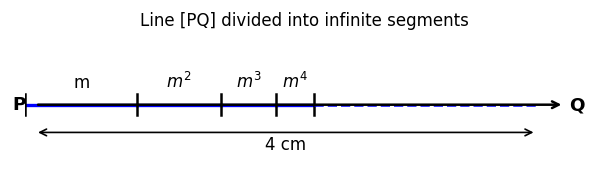
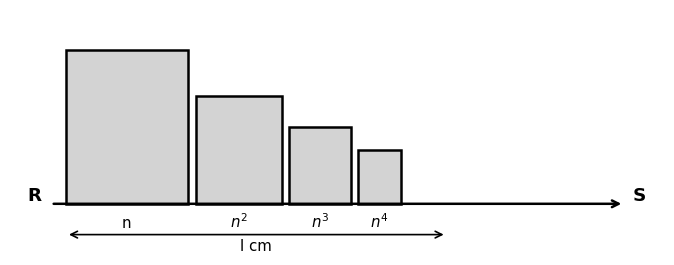
(a) m + m² + m³ + … = 4 ⇒ m/(1-m) = 4 ⇒ m = 4/5 ✓ (b) n²/(1-n²) = 25/11 ⇒ 11n² = 25 - 25n² ⇒ 36n² = 25 ⇒ n = 5/6; l = n/(1-n) = (5/6)/(1/6) = 5
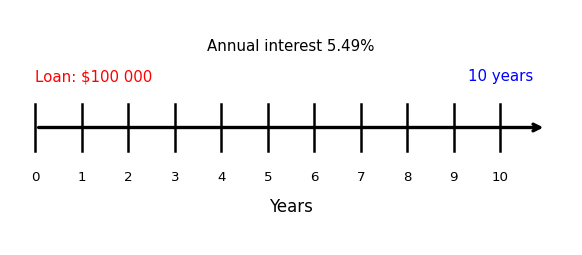
Bill takes out a bank loan of $100 000 at an annual interest rate of 5.49%. The interest is calculated at the end of each year and added to the amount outstanding.
To pay off the loan, Bill makes quarterly deposits of $P at the end of every quarter in a savings account, paying a nominal annual interest rate of 3.2%. He makes his first deposit at the end of the first quarter after taking out the loan.
Answer
(a) 100000 × (1.0549)¹⁰ ≈ $170,763 (b) Geometric series with first term P(1.008) and ratio 1.008, 40 terms → P[(1.008⁴⁰−1)/(0.008)] ✓ (c) P ≈ $3,552 (d) Q_min = 8000/0.035 = $228,571
Answer
(a) 32 + 240x + 720x² + 1080x³ + 810x⁴ + 243x⁵ (b) C(5,3)·2²·k³ = 10·4·k³ = 2160 ⇒ k³ = 54 ⇒ k = 3·³√2 (c) 1 − 3x + 6x² − 10x³ + …, valid for |x| < 1 (d) x = −0.03 → 1 + 0.09 + 0.0054 + 0.00027 ≈ 1.0957 (Exact: 1.09274…)
Consider the system: x + 2y + z = 4; 2x − y + 3z = 9; x + 5y + kz = 1, where k ∈ ℝ.
Answer
(a) k = −1 (b) x = 2, y = −1, z = 3 (c) Augmented matrix is inconsistent → no solution
Prove by mathematical induction that 4ⁿ − 1 is divisible by 3 for all n ∈ ℤ⁺.
Answer
(a) n=1: 4¹−1=3 ✓ (b) Assume 4ᵏ−1=3m for some integer m (c) 4^(k+1)−1 = 4(3m+1)−1 = 3(4m+1), divisible by 3 ✓
Prove by induction that Σᵣ₌₁ⁿ r·r! = (n+1)! − 1 for all n ∈ ℤ⁺.
Answer
(a) n=1: LHS=1·1!=1, RHS=2!−1=1 ✓ (b) Assume Σᵣ₌₁ᵏ r·r! = (k+1)! − 1 (c) Add (k+1)·(k+1)!: (k+1)![1+(k+1)]−1 = (k+2)!−1 ✓
Let z = 2 + 3i and w = 1 − i.
Answer
(a) z+w = 3 + 2i; z×w = 5 + i (b) |z| = √13; arg(z) ≈ 0.983 rad (c) z = √13 (cos 0.983 + i sin 0.983)
Let z = √3 + i.
Answer
(a) r = 2, θ = π/6; z = 2(cos(π/6)+i sin(π/6)) (b) z⁶ = −64 (c) √2 (cos(π/18 + 2kπ/3) + i sin(π/18 + 2kπ/3)) for k = 0,1,2
Answer
(a) Expand (cosθ + i sinθ)⁴, take real part; use sin²θ = 1 − cos²θ ✓ (b) θ = 0, π/2, π, 3π/2 (c) x = cos(π/8), cos(3π/8), cos(5π/8), cos(7π/8)
Consider the system: x + 2y + z = 4; 2x − y + 3z = 9; x + 5y + kz = 1, where k ∈ ℝ.
Answer
(a) k = −1 (b) x = 2, y = −1, z = 3 (c) Augmented matrix is inconsistent ⇒ no solution
Answer
(a) 1 − 2x + 3x² − 4x³ + … (b) Substitute x = 1/2: (3/2)^(−2) = 4/9; series = Σ(n+1)(1/2)ⁿ = 4 ✓
A committee of 4 is to be chosen from 6 men and 5 women.
Answer
(a) C(11,4) = 330 (b) C(5,2)·C(6,2) + C(5,3)·C(6,1) + C(5,4)·C(6,0) = 150 + 60 + 5 = 215
Six students are to be seated in a row of 6 chairs.
Answer
(a) 6! = 720 (b) 720 − 2 × 5! = 720 − 240 = 480 (c) (6−1)! = 120
Express (5x + 1)/[(x + 3)(x − 1)] in partial fractions.
Answer
(a) A/(x+3) + B/(x−1) (b) A = −7/2, B = 3/2 (c) −(7/2) ln|x+3| + (3/2) ln|x−1| + C
Answer
(a) A = 5/3, B = 4/3, C = 1/3 (b) ≈ 2.01 (to 3 s.f.)